Discover World Cultures Through Native Content (Without Language Barriers)
The best way to understand a culture is through its original voice. Explore Japanese festivals, German documentaries, Latin American music, and more — in their native languages, with FluentCap making every word accessible.
- Why Native Content Matters for Cultural Understanding
- Types of Cultural Content You Can Explore
- How FluentCap Makes Cultural Discovery Accessible
- Cultural Discovery Journeys Around the World
- Building Your Cultural Exploration Practice
- Thank You to Our Providers
- Frequently Asked Questions
The World Is Waiting to Be Heard
Want to discover world cultures through native content but don't speak the language? You're not alone. Millions of people miss out on authentic cultural experiences because foreign media feels inaccessible without subtitles.
Imagine watching a traditional Japanese tea ceremony explained by a master in Kyoto. Or experiencing the energy of Carnival in Rio through Brazilian commentary. Or understanding German engineering culture through a documentary narrated in its native tongue.
The world's cultures are always speaking. But language barriers keep most of us from listening.
You've probably experienced this frustration: finding amazing content from another country, only to realize there are no subtitles. Or watching a dubbed version that feels empty, stripped of the original emotion and nuance.
Here's the truth that experienced travelers and cultural enthusiasts know: you never truly understand a culture through translation alone. The rhythm of speech, the humor, the expressions — these elements carry cultural meaning that gets lost when filtered through another language.
FluentCap changes this. With real-time transcription and optional translation, any audio content becomes accessible — allowing you to experience cultural immersion through native media without learning the language first.
Why Native Content Matters for Cultural Understanding
Language Carries Culture
Language isn't just a communication tool — it's a vessel for cultural identity. According to UNESCO's research on linguistic diversity, languages encode unique worldviews, traditions, and ways of thinking that cannot be fully expressed in translation.
When you hear content in its original language:
| Aspect | What You Gain |
|---|---|
| Emotional nuance | Tone, rhythm, and emphasis that convey feelings beyond words |
| Cultural expressions | Idioms, proverbs, and humor that define a society |
| Authentic perspective | How people actually talk about their own culture |
| Historical context | References and connections that translations often miss |
The Limitation of Dubbing and Translation
Dubbing replaces the original voice entirely. You lose the speaker's personality, their regional accent, their emotional delivery. Translation, while helpful, often simplifies complex cultural concepts to make them accessible — at the cost of depth.
Native content with transcription support gives you both: the authentic experience and the comprehension.
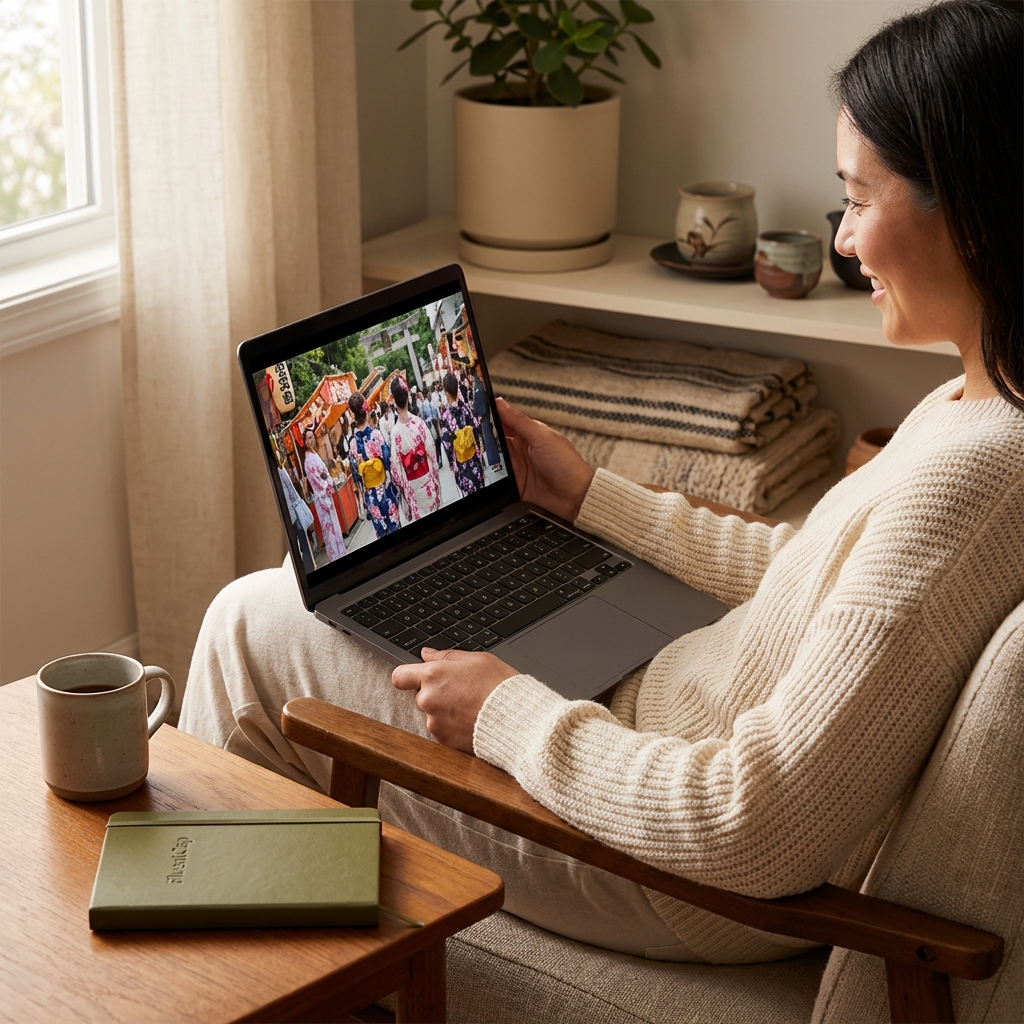
Types of Cultural Content You Can Explore
The internet has made global content more accessible than ever. Here's what you can discover:
News and Current Affairs
Understanding how other countries report on events reveals their cultural values and perspectives.
| Region | Notable Sources | What You'll Learn |
|---|---|---|
| Japan | NHK World | Precision, respect, attention to detail |
| Germany | ARD, ZDF | Thorough analysis, environmental focus |
| France | France 24, Arte | Cultural commentary, artistic perspective |
| Middle East | Al Jazeera Arabic | Regional viewpoints, historical context |
| Latin America | Regional outlets | Passion, community focus, social issues |
Traditional Arts and Music
Every culture expresses itself through art. With FluentCap, you can understand the stories behind performances — similar to how you can watch foreign movies with real subtitles generated in real-time:
- Rakugo (落語): Japanese comedic storytelling with centuries of tradition
- Fado: Portuguese songs of longing and fate
- Mariachi: Mexican musical narratives of love, loss, and celebration
- Ghazal: Urdu poetry recitations that explore deep emotions
- Opera: Italian, German, and French masterpieces in their intended languages
Documentaries and Cultural Programs
Many countries produce excellent documentaries that never get translated:
- NHK Specials: Deep dives into Japanese society, history, and nature
- Arte documentaries: European co-productions with sophisticated cultural analysis
- CCTV features: Insights into Chinese history and contemporary life
- BBC World Service: Stories from correspondents in their local languages
Festivals and Live Events
Experience the world's celebrations as locals do:
- Oktoberfest livestreams with German commentary
- Diwali celebrations with Hindi/regional language coverage
- Carnival broadcasts in Portuguese
- Chinese New Year galas with Mandarin hosts
- Day of the Dead observances in Spanish
Cooking and Lifestyle Content
Cooking shows and lifestyle content reveal how cultures approach daily life:
- How Italian nonnas pass down recipes through generations
- Japanese attention to presentation and seasonality
- Indian spice wisdom shared in regional languages
- Korean food culture beyond what reaches international audiences
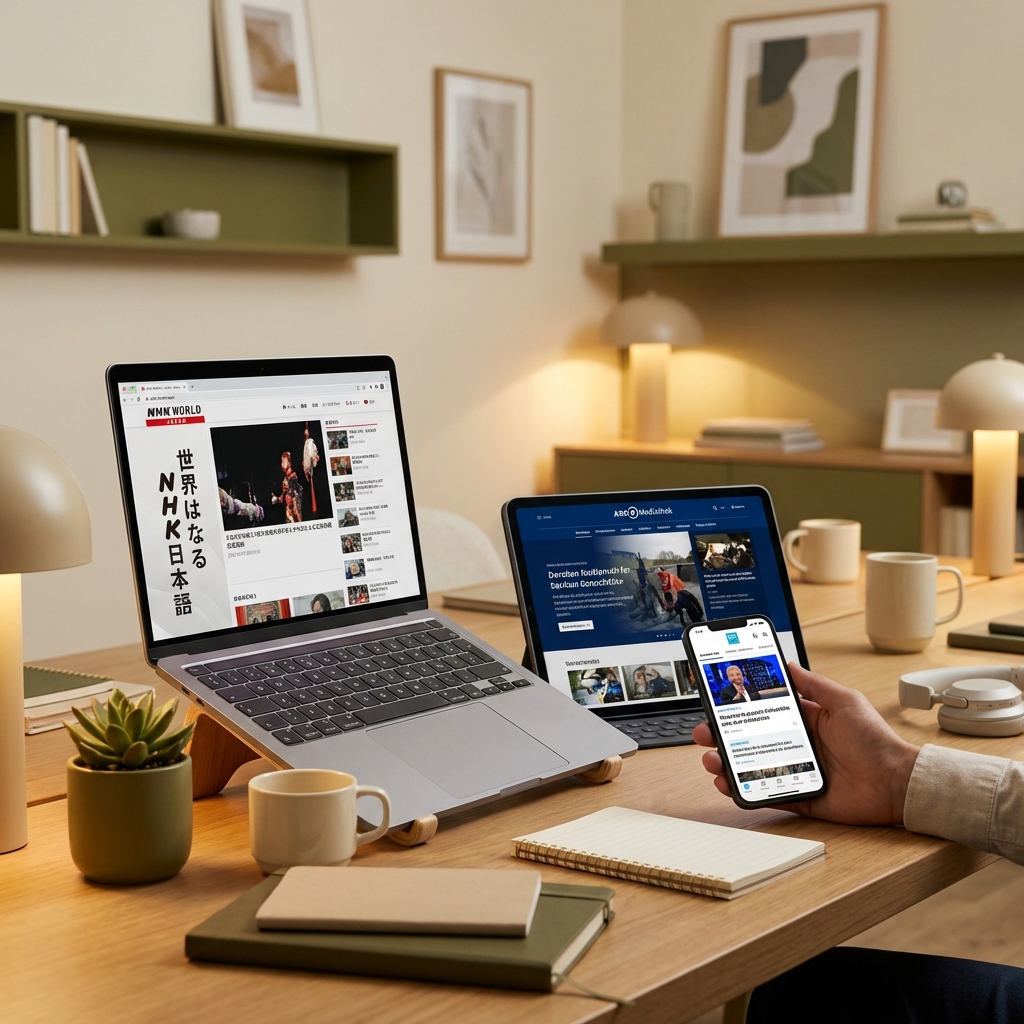
How FluentCap Makes Cultural Discovery Accessible
Real-Time Transcription for Any Content
FluentCap works with any audio playing on your computer. Watch a Japanese documentary on YouTube, stream a German news broadcast, or play a French podcast — and see the transcription appear in real-time.
How it works:
- Play any content from any source — streaming sites, news portals, live broadcasts
- FluentCap captures the audio and transcribes it instantly
- See the text as you hear it, understanding what's being said
- Optionally add translation to your preferred language for context
Adjustable Support for Your Journey
Cultural discovery isn't one-size-fits-all. FluentCap adapts to your needs:
| Exploration Level | Recommended Setup |
|---|---|
| Just curious | Full transcription + translation visible |
| Learning the language | Transcription primary, translation on-demand |
| Familiar with the culture | Transcription for unfamiliar terms only |
| Near-native understanding | Occasional checks for regional expressions |
Highlight and Save Cultural Discoveries
When you encounter fascinating cultural concepts, expressions, or ideas:
- Highlight the text to save it for later
- Build a collection of cultural insights from different countries
- Review and reflect on patterns and differences you've discovered
- Share discoveries with friends interested in the same cultures
Cultural Discovery Journeys Around the World
Japan: Precision and Tradition
Japanese content offers a window into a culture that balances ancient tradition with cutting-edge innovation. If you're interested in Japanese media, you might also enjoy learning Japanese by watching anime.
What to explore:
- NHK documentaries on traditional crafts (職人 - shokunin culture)
- Variety shows that reveal Japanese humor and social dynamics
- Historical dramas (大河ドラマ - taiga dramas) spanning centuries of history
- YouTube channels by Japanese creators sharing daily life
Cultural insight: Japanese media often emphasizes 気配り (kikubari) — the awareness of others' needs before they're expressed. You'll notice this in how hosts interact and how stories are told.
Germany: Depth and Analysis
German content tends toward thorough exploration of topics, reflecting a cultural value of understanding things deeply.
What to explore:
- ARD/ZDF documentaries on history, science, and society
- Talk shows like "Anne Will" for political discourse
- Regional content showing Germany's diverse local cultures
- Engineering and technology programs
Cultural insight: The German word "Gründlichkeit" (thoroughness) appears throughout their media. Topics are explored comprehensively, with historical context and multiple perspectives.
Latin America: Passion and Community
Latin American content pulses with energy, emotion, and a strong sense of community. Planning a trip? Check out how to prepare for your trip abroad with language immersion.
What to explore:
- Telenovelas that reflect social issues through dramatic storytelling
- Music performances from cumbia to reggaeton to regional folk
- News coverage with passionate commentary
- Cooking shows celebrating regional diversity
Cultural insight: The concept of "sobremesa" — lingering at the table after meals for conversation — extends to media. Programs take time, build relationships, and aren't rushed.
India: Diversity and Storytelling
India produces more films than any other country, and its media reflects incredible cultural diversity.
What to explore:
- Bollywood and regional cinema (Tamil, Telugu, Malayalam, Bengali)
- Classical music and dance performances with expert commentary
- Religious and spiritual content from various traditions
- News in multiple languages showing different regional perspectives
Cultural insight: India's 22 official languages mean even Indians use subtitles for content from other regions. You're joining a tradition of cross-cultural discovery within one nation.
Middle East: Heritage and Contemporary Life
Arabic and Persian content reveals cultures with deep historical roots navigating modern challenges.
What to explore:
- Cultural documentaries on ancient history and traditions
- Contemporary music blending traditional and modern influences
- News and analysis showing regional perspectives rarely seen in Western media
- Poetry and literary programs celebrating rich written traditions
Building Your Cultural Exploration Practice
Start With What Interests You
Don't force yourself to watch content you wouldn't enjoy. Cultural discovery works best when driven by genuine curiosity:
- Love food? Explore cooking content from cultures you want to understand
- Music fan? Dive into performance videos with artist explanations
- History buff? Find documentaries about eras that fascinate you
- Current affairs? Compare how different countries cover global events
Create a Regular Practice
Cultural understanding develops through consistent exposure. Consider:
- 15-30 minutes daily of content from a culture you're exploring
- Focus on one culture for a few weeks before broadening
- Keep notes on interesting expressions or concepts you discover
- Follow the threads: let one discovery lead to the next
Connect With Communities
Your discoveries become richer when shared:
- Join online communities focused on cultural exchange
- Discuss what you're learning with others interested in the same cultures
- Share interesting finds — you'll receive recommendations in return
- Consider language exchange with native speakers who can provide context
Combine With Language Learning
If you're inspired to learn the language, native content is your best resource:
- Native content with FluentCap provides comprehensible input — the most effective form of language acquisition
- You can learn languages by watching movies with FluentCap's real-time transcription
- Start with content you already understand culturally
- Gradually reduce translation support as comprehension improves
- Let cultural interest drive language motivation
Thank You to Our Providers
FluentCap's real-time transcription is powered by incredible speech-to-text providers who believe in accessible technology:
- Deepgram: Offers $200 in free credits (~750 hours of transcription)
- AssemblyAI: Provides $50 in free credits (~140 hours)
- Gladia: Gives 10 free hours every month
- Shunya: Offers $100 in free credits (~300 hours)
These providers support transcription in dozens of languages, making global cultural exploration possible. When your free credits run out, we encourage you to support them. Their pricing is incredibly fair — just $0.15-0.40 per hour, which is 60-80% cheaper than traditional subscription apps.
They deserve your support for democratizing access to the world's cultures.
Frequently Asked Questions
What makes native content better than translated versions?
Native content preserves the original speaker's voice, emotion, and cultural expressions. Translation inevitably simplifies and filters content through another cultural lens. With native content plus transcription, you get authentic cultural expression with comprehension support — the best of both worlds.
How do I find authentic cultural content online?
Start with official broadcasters like NHK (Japan), ARD/ZDF (Germany), France 24 (France), or regional news outlets. YouTube is rich with content creators sharing their cultures. Social media platforms increasingly feature native-language content from around the world. Search in the local language using translated keywords for the best results.
Can I explore cultures without knowing the language at all?
Absolutely. FluentCap provides translation alongside transcription, so you can understand content without prior language knowledge. Many cultural explorers start this way, and some are inspired to begin learning the language as their interest deepens.
What platforms host traditional cultural content?
Major streaming services increasingly offer international content. YouTube is the richest free source. National broadcasters like NHK World, DW (Deutsche Welle), and France 24 offer free streaming. Cultural institutions often archive performances and documentaries online as well.
How does FluentCap help with cultural discovery?
FluentCap transcribes any audio playing on your computer in real-time, with optional translation. This means any content — from obscure regional YouTube videos to official national broadcasts — becomes accessible. You remove the language barrier while preserving the authentic cultural experience.
Is cultural immersion through media actually effective?
Research consistently shows that media exposure builds cultural competency and understanding. A study published in Communication Research found that exposure to foreign media significantly increases cultural empathy and reduces prejudice. Media provides a window into daily life, values, and perspectives that static cultural education cannot match.
How can I watch foreign videos without subtitles?
FluentCap generates real-time transcription for any audio playing on your computer. Simply play a foreign video from YouTube, streaming services, or any website, and FluentCap will transcribe it instantly. You can also enable translation to see both the original transcription and your preferred language side by side.
Is native content better than dubbed content for cultural understanding?
Yes, native content preserves the authentic cultural experience. Dubbing replaces the original voice, losing the speaker's personality, regional accent, and emotional delivery. With native content plus FluentCap's transcription, you experience the culture as locals do while still understanding every word.
What is the best way to experience foreign culture online?
The most immersive approach is consuming native content with real-time transcription support. Start with topics you're already interested in — food, music, news, or entertainment — from the culture you want to explore. Use FluentCap to transcribe and optionally translate the audio, building your cultural understanding naturally over time.
Your World, Waiting to Be Heard
Every culture has stories to tell. Wisdom to share. Perspectives that can broaden your understanding of what it means to be human.
Until recently, language barriers kept most of this treasure hidden. If you didn't speak the language, you could only access the tiny fraction that gets translated — and even then, filtered through someone else's interpretation.
That barrier is gone now.
With FluentCap, the Japanese craftsman explaining his life's work in Kyoto speaks directly to you. The German historian narrating a documentary shares insights in their original depth. The Brazilian grandmother teaching her grandchild to cook passes down traditions you can witness and understand.
The world's cultures are waiting for curious minds like yours.
Try FluentCap free and start exploring foreign cultures through native content — no language skills required.
Start listening. Start discovering. Start understanding.
Related Articles
More ways to explore the world with FluentCap:
- Learn Languages by Watching Movies — Turn entertainment into education
- Prepare for Your Trip Abroad with Language Immersion — Get culturally ready before you travel
- Watch Foreign Movies with Real Subtitles — Experience international cinema authentically
- Comprehensible Input: Learn Languages Naturally — The science behind immersive learning
— FluentCap Team
Every conversation. Every language. Understood.