5 Bilingual Brain Benefits Backed by Neuroscience (2026 Research)
Your brain physically changes when you learn a second language. From increased gray matter to delayed Alzheimer’s onset, here is what peer-reviewed research reveals about the remarkable cognitive benefits of bilingualism — and how technology makes it more accessible than ever.
- 3,004 Teenagers and 155 Language Combinations
- The Science Is Clear — Bilingual Brains Are Physically Different
- 5 Proven Cognitive Benefits of Being Bilingual
- Monolingual vs. Bilingual Brain — What the Research Shows
- You Don’t Need to Move Abroad — How Technology Bridges the Gap
- How to Start Training Your Bilingual Brain Today
- The World Is Becoming Multilingual — And Your Brain Wants to Join
- Frequently Asked Questions
3,004 Teenagers and 155 Language Combinations
On February 12, 2026, the European Commission announced the winners of Juvenes Translatores — an annual translation contest for 17-year-old students across the EU. This year, 3,004 participants from 716 schools translated texts using 155 different language combinations out of 552 available. The theme: "From languages to landscapes: European journeys to mutual understanding."
Those numbers are impressive. But here is what makes them extraordinary: every single one of those teenagers is building a brain that is measurably different from their monolingual peers. The bilingual brain benefits are not abstract or metaphorical. They are structural, cognitive, and lasting.
Neuroscience has spent the past two decades documenting what happens inside the heads of people who speak more than one language. The findings are consistent and remarkable: bilingual brains have more gray matter, stronger neural connections, and better resistance to cognitive decline. Speaking multiple languages does not just help you communicate — it physically rewires your brain.
And thanks to modern technology, you no longer need to grow up in a multilingual household or move abroad to start experiencing these benefits.
The Science Is Clear — Bilingual Brains Are Physically Different
This is not pop psychology. The evidence comes from peer-reviewed neuroimaging studies that have scanned the brains of bilingual and monolingual individuals side by side.
Gray Matter Density
Research published in NeuroImage: Clinical (Pereira Soares et al., 2023) demonstrated that language training over three months or more produces measurable increases in gray matter volume in the left inferior frontal gyrus and middle frontal regions — the areas responsible for speech production, grammatical processing, and executive control.
More gray matter means more neural resources available for complex thinking. It is like upgrading your computer’s processor.
White Matter Connectivity
A 2024 study published in PNAS by researchers at the Max Planck Institute (Wei et al.) tracked language learners through intensive immersion and found that within the first months, the brain strengthened white matter connections within the language network. White matter is the insulation around neural fibers — more of it means faster signal transmission between brain regions.
The study also revealed that the right hemisphere — which plays a secondary role in language for monolinguals — became actively recruited. Your brain literally expands its territory to handle a second language.
Slower Brain Aging
Perhaps the most striking finding comes from longitudinal research on cognitive aging: speaking multiple languages can significantly slow biological brain aging. A meta-analysis published in the National Library of Medicine confirmed that bilingual individuals maintain structural brain integrity longer than monolingual peers. The National Institute on Aging recognizes that cognitive reserve — built partly through multilingual engagement — is a key protective factor against neurodegenerative diseases.
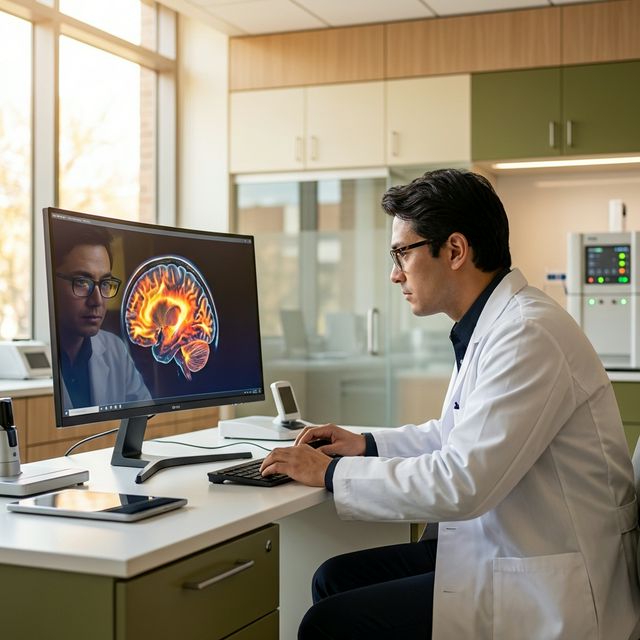
5 Proven Cognitive Benefits of Being Bilingual
A 2025 review by Marian and Hayakawa published in Current Directions in Psychological Science offers one of the most comprehensive analyses of bilingual cognitive advantages. Here are the five benefits with the strongest scientific support:
In summary: The five scientifically proven bilingual brain benefits are: enhanced executive function, delayed Alzheimer’s onset by 4–5 years, superior problem-solving, stronger working memory, and greater cognitive flexibility. These benefits are supported by peer-reviewed neuroimaging and longitudinal studies across multiple research institutions worldwide.
1. Enhanced Executive Function
Bilingual individuals consistently outperform monolinguals on tasks requiring attention control, task-switching, and inhibition. The constant need to manage two language systems — activating one while suppressing the other — trains the brain’s executive control center.
A 2025 research review from the University of Ottawa confirmed that bilingualism leads to improved executive function, longer attention spans, and greater cognitive flexibility across all age groups.
2. Delayed Alzheimer’s Onset by 4–5 Years
Multiple studies have documented that bilingualism contributes to cognitive reserve — the brain’s ability to resist damage from neurodegenerative diseases. A landmark study by Bialystok, Craik, and Freedman (2007) found that bilingual individuals develop Alzheimer’s symptoms an average of 4–5 years later than monolinguals, even when brain pathology is similar.
This finding has been consistently replicated. The National Institute on Aging (NIH) notes that intellectually stimulating activities — including learning languages — are among the modifiable factors that may help reduce risk.
3. Superior Problem-Solving and Creativity
Research from the University of Strathclyde and other institutions shows that bilingual individuals often excel in pattern recognition, creative thinking, and divergent problem-solving. Managing multiple linguistic frameworks gives the brain practice in seeing problems from different angles — a cognitive habit that transfers to non-linguistic domains.
4. Stronger Working Memory
The bilingual brain efficiently stores and retrieves information across two language systems, leading to enhanced working memory capacity. A 2023 study published in the Journal of Cognitive Enhancement confirmed that bilingualism strengthens working memory alongside executive function and cognitive flexibility.
5. Greater Cognitive Flexibility
Perhaps the most practical benefit: bilingual people adapt more easily to new situations, unexpected changes, and unfamiliar rules. The brain’s constant practice in switching between linguistic systems translates directly to better mental agility in everyday life.
A 2025 study from the National Center for Biotechnology Information (NCBI) found that multilingual children — including those with Autism Spectrum Disorder — demonstrated superior executive function and perspective-taking skills compared to monolingual peers. The cognitive benefits of bilingualism appear to be universal across ages and populations.
Monolingual vs. Bilingual Brain — What the Research Shows
Here is a summary of the measurable differences between monolingual and bilingual brains, based on peer-reviewed neuroimaging and cognitive studies:
| Cognitive Area | Monolingual Brain | Bilingual Brain |
|---|---|---|
| Gray matter density | Baseline | Increased in frontal and temporal regions |
| Alzheimer’s symptom onset | Average age | Delayed by 4–5 years |
| Task-switching speed | Standard | Significantly faster |
| Working memory | Standard capacity | Enhanced capacity |
| Cognitive flexibility | Baseline | Superior adaptability |
| Attention control | Standard | Enhanced inhibitory control |
| Creative problem-solving | Standard | Increased divergent thinking |
Sources: Bialystok et al. (2007), Wei et al. (2024), Pereira Soares et al. (2023), Marian & Hayakawa (2025)
You Don’t Need to Move Abroad — How Technology Bridges the Gap
Here is the good news: you do not need to relocate to Tokyo or Barcelona to start rewiring your brain. The key insight from the science of natural language acquisition — the foundational framework developed by Dr. Stephen Krashen — is that your brain acquires language when it receives input that is slightly above your current level.
The challenge has always been access. Where do you find hours of engaging, native-language content that you can actually understand?
The answer: it is already on your computer.
Foreign films on streaming platforms. International podcasts. YouTube channels in your target language. News broadcasts. Audiobooks. Gaming streams. The content exists in abundance. What was missing was the bridge between "incomprehensible noise" and "comprehensible input."
That is exactly what real-time transcription provides. By seeing words on screen as they are spoken, your brain can process both the auditory signal (what you hear) and the visual confirmation (what you read) simultaneously. Linguists call this phonological-orthographic mapping, and research confirms it significantly accelerates vocabulary acquisition and phonetic tuning.
Tools like FluentCap work with any audio on your computer — whether you are watching immersive film-based content, following audio immersion techniques through podcasts, listening to stories in your target language, or taking academic content with live captions — providing live captions and translation so you can stay immersed without drowning.

How to Start Training Your Bilingual Brain Today
You do not need a textbook, a classroom, or a plane ticket. Here is a practical path based on what the neuroscience tells us:
Step 1: Choose a Language That Excites You
Motivation matters more than difficulty. Research on memory consolidation consistently shows that emotionally engaging experiences are encoded more strongly. Choose a language connected to something you genuinely love — Korean for K-dramas, Japanese for anime, Spanish for music, French for cinema.
Step 2: Find Compelling Native Content
Your brain needs real, contextual input — not isolated vocabulary lists. Start with content you would enjoy even in your native language:
- Films and TV series with complex stories and natural dialogue
- Podcasts on topics you care about
- YouTube channels by native creators
- Audiobooks of stories you already know
- Live streams from gaming, music, or cultural events
Step 3: Use Real-Time Transcription as Scaffolding
In the early stages, your ears cannot decode native-speed speech on their own. Real-time transcription provides visual scaffolding — letting your eyes support what your ears are still learning. This is not cheating; it is the science behind effective input in action.
As your listening skills improve, you can begin using progressive listening challenges — adding a slight temporal offset that challenges your brain to process the audio before visual confirmation arrives. This technique accelerates the shift from passive reading to active listening.
Step 4: Be Consistent, Not Intense
The brain changes documented in research studies occurred with regular daily exposure, not marathon study sessions. Even 20–30 minutes of meaningful input per day activates the neuroplastic processes that build bilingual brain architecture. The key is consistency across weeks and months.
The World Is Becoming Multilingual — And Your Brain Wants to Join
The EU’s Juvenes Translatores contest is just one signal of a global shift. In the United States, Pittsburgh Public Schools reported a 39% increase in English Language Learners over the past two years — 1,983 students speaking 58 different languages. Educational leaders are advocating for an “English-plus” framework that values sustained bilingual competence alongside English proficiency.
Employers are increasingly treating bilingualism as a workforce readiness indicator. The demand for bilingual talent spans healthcare, technology, education, customer service, and diplomacy.
And the cognitive research is unambiguous: the earlier and more consistently you engage with a second language, the greater the structural benefits for your brain.
A 2026 research initiative by Cardiff University is specifically studying how immersive technologies and AI can sustain healthy language-learning cultures — recognizing that the future of bilingualism is inseparable from the tools we use.
You do not need to wait for the future. The tools already exist. The research already supports the approach. And your brain is already wired to adapt.
Start building your bilingual brain today — try real-time immersion with any content you love.
Frequently Asked Questions
Do bilingual brains actually age slower?
Yes. A meta-analysis published in PubMed found that speaking multiple languages can significantly slow biological brain aging. Additionally, extensive research shows that bilingualism delays the onset of Alzheimer’s disease symptoms by an average of 4–5 years, even when underlying brain pathology is similar between bilingual and monolingual individuals. The constant cognitive exercise of managing two language systems builds neural resilience.
Is it too late to become bilingual as an adult?
No. While children have certain advantages in pronunciation and implicit grammar learning, adults retain significant neuroplasticity for language acquisition. A 2024 study from the Max Planck Institute demonstrated substantial neural reorganization in adult learners during intensive language immersion. Adults actually have advantages in vocabulary acquisition, understanding abstract concepts, and applying strategic learning methods.
How many hours of language exposure does it take to see cognitive benefits?
Research suggests that measurable brain changes begin within the first two weeks of consistent language exposure. Structural changes in gray matter and white matter become detectable within two to three months of regular practice. However, you do not need full immersion — even 20 to 30 minutes per day of meaningful input activates neuroplastic processes that contribute to bilingual brain benefits over time.
Can watching foreign films and media make you bilingual?
Foreign media alone will not make you fluent, but it is one of the most effective tools for building bilingual brain architecture. Research on comprehensible input theory shows that understanding native-language content at or slightly above your level drives natural language acquisition. When paired with real-time transcription — so your brain can connect sounds with written words — media consumption becomes a powerful form of structured immersion.
What are the best languages to learn for brain health?
The cognitive benefits of bilingualism appear to be universal regardless of which languages you speak. Research has documented similar brain structural changes across learners of European, Asian, and other language families. The most important factor is sustained engagement, so choose a language connected to content, culture, or people that genuinely motivate you.
Does bilingualism help prevent Alzheimer’s disease?
Bilingualism does not prevent Alzheimer’s, but it significantly delays the onset of clinical symptoms. According to research cited by the National Institute on Aging, activities that build cognitive reserve — including language learning — help the brain compensate for age-related damage. Bilingual individuals typically show symptoms 4–5 years later than monolinguals with comparable brain pathology.
Scientific References
-
Wei, X., Anwander, A., & Friederici, A. D. (2024). White matter plasticity during second language learning. PNAS. DOI: 10.1073/pnas.2306286121
-
Marian, V., & Hayakawa, S. (2025). Consequences of bilingual language coactivation. Current Directions in Psychological Science. DOI: 10.1177/09637214251339455
-
Pereira Soares, S. M., et al. (2023). Language training-related gray matter volume changes. NeuroImage: Clinical. DOI: 10.1016/j.nicl.2023.103481
-
Bialystok, E., Craik, F. I. M., & Freedman, M. (2007). Bilingualism as a protection against the onset of symptoms of dementia. Neuropsychologia. DOI: 10.1016/j.neuropsychologia.2007.03.012
-
National Institute on Aging (NIH). Preventing Alzheimer’s Disease: What Do We Know?
-
National Library of Medicine (PubMed). Bilingualism and cognitive aging: A meta-analysis
Related Articles
More on the science of language learning and bilingual brain development:
- Your Brain’s First 100 Days in a New Country — Week-by-week neuroscience of language immersion
- The Science Behind Natural Language Acquisition — How comprehensible input drives bilingual brain growth
- What Research Says About Film-Based Language Learning — Peer-reviewed evidence for visual immersion
- Audio Immersion Techniques for Language Adaptation — How podcasts build bilingual listening skills
- Progressive Listening Challenges for Brain Training — Advanced technique for strengthening auditory processing
— FluentCap Team
The FluentCap team combines expertise in linguistics, cognitive science, and speech technology to build tools that make language accessible. Our mission: language should never be a barrier to understanding.
Built to bring good things to the world.